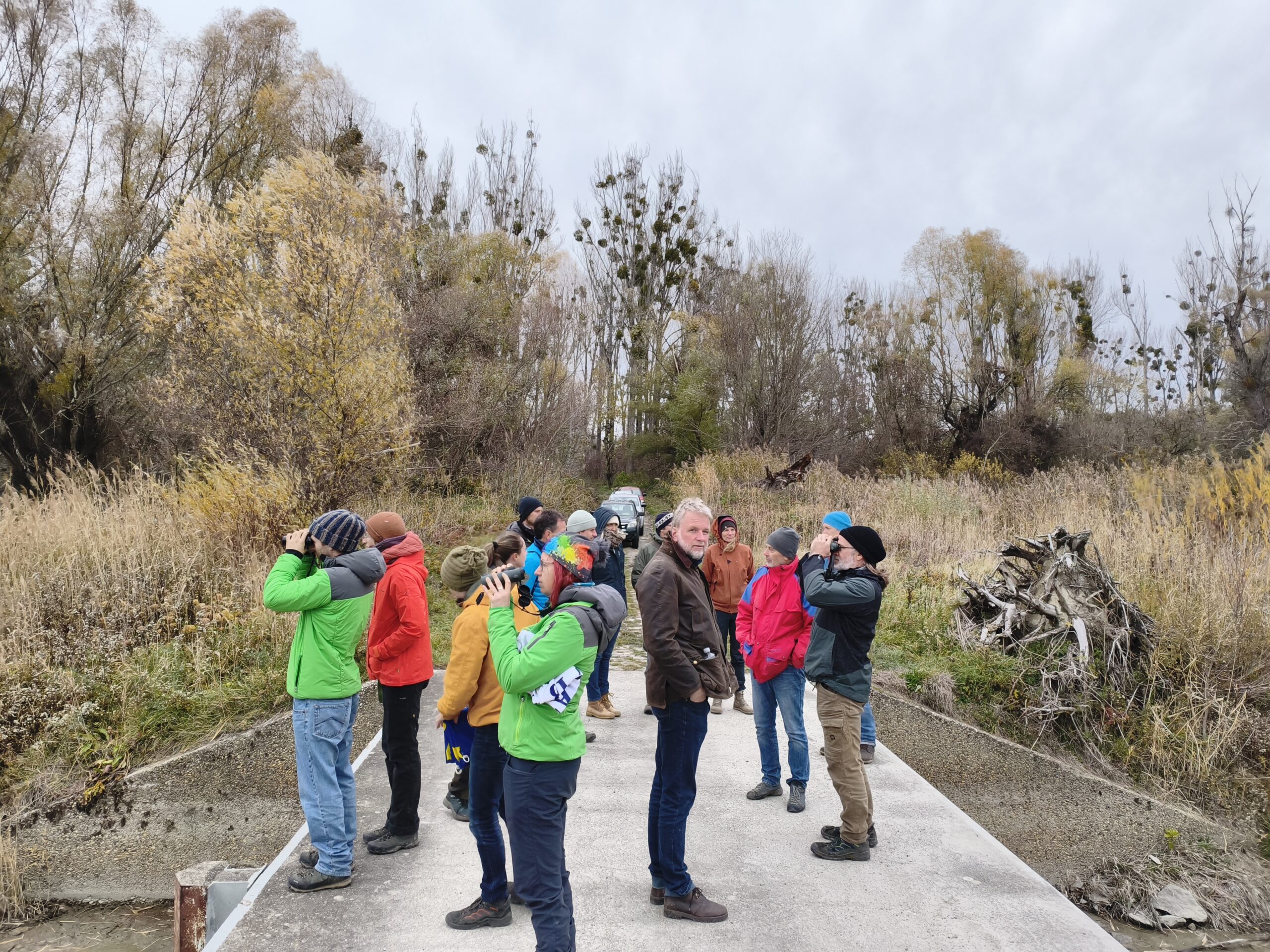
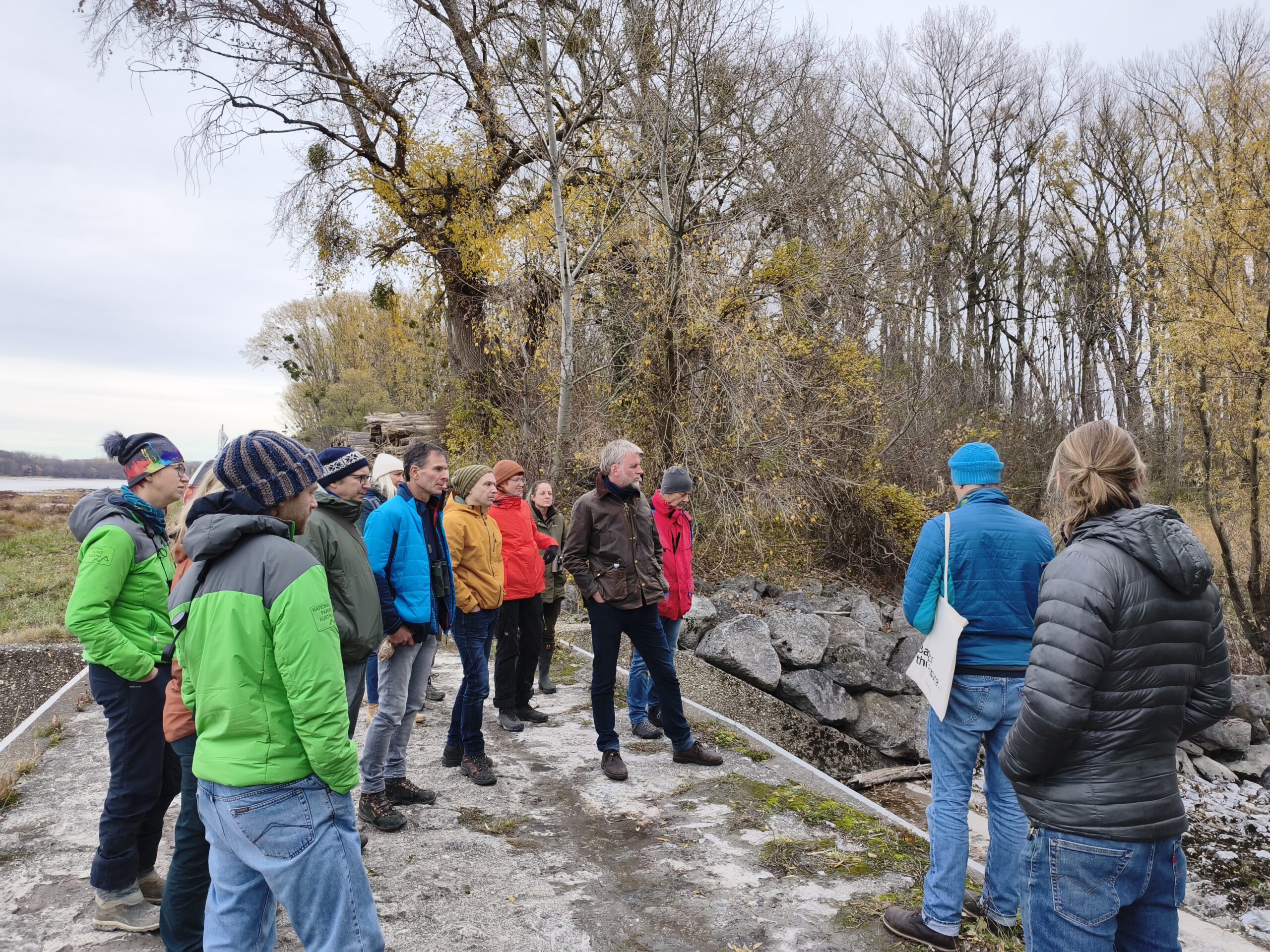
On 19 December, representatives of several LIFE projects from Donau-Auen National Park, including LIFE WILDisland, and colleagues from WWF Austria met on the southern bank of the Danube in Haslau, Austria, to exchange experiences, explore synergies and discuss future restoration activities.
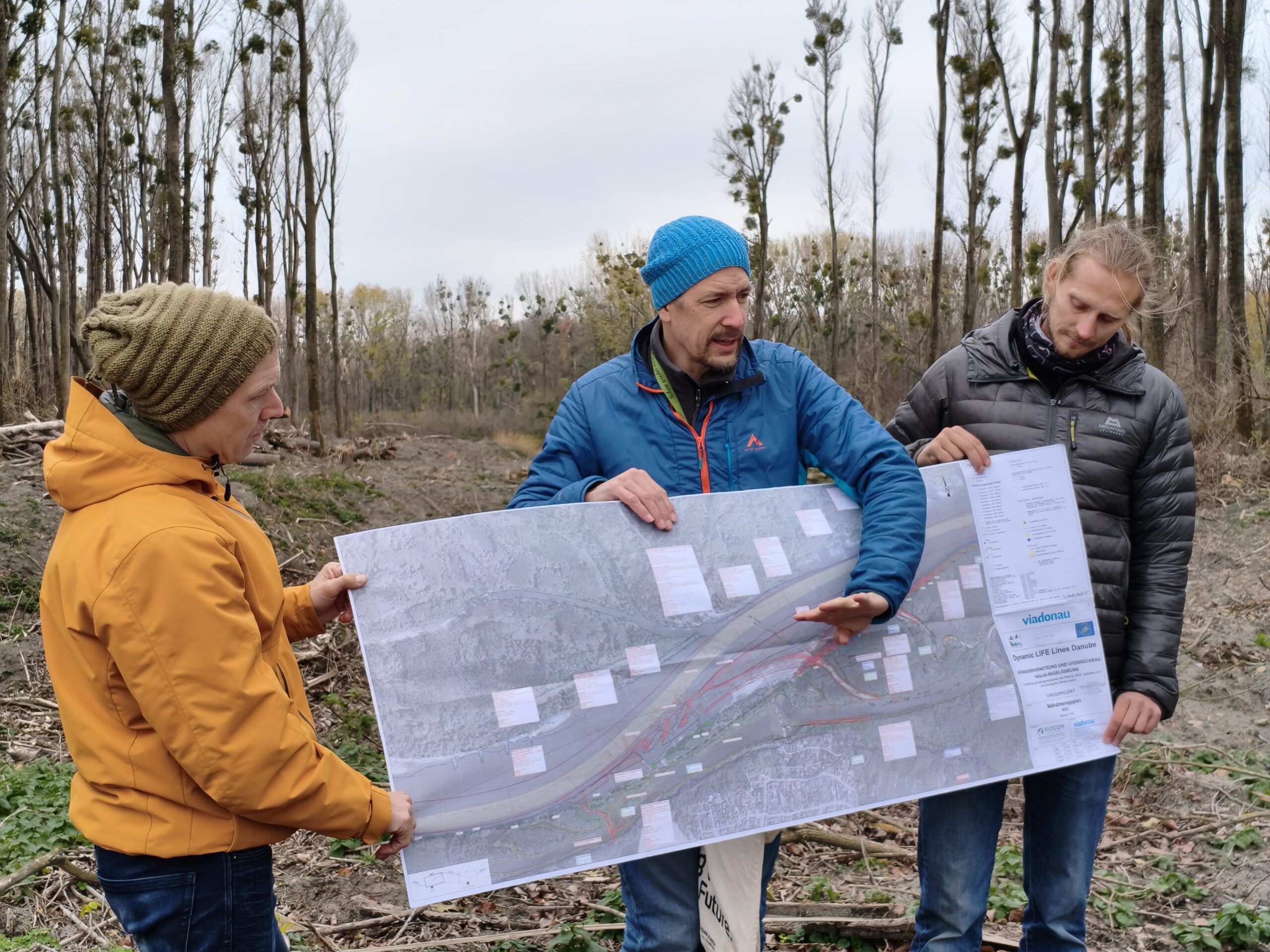
Our colleagues from the Dynamic LIFE Lines Danube project hosted the meeting, presenting their ambitious new side-arm restoration and riverbank embankment removal measures in the Haslau–Regelsbrunn area.
Located along the right bank of the Danube between river kilometres 1902 and 1895, the Haslau–Regelsbrunn restoration is one of the largest side-arm systems of the Austrian Danube. Despite historical river regulation, natural sedimentation and erosion processes can still be observed here, partly thanks to pioneering restoration measures implemented in the 1990s.
The area also has a special history of nature conservation: in 1989, WWF secured a large part of these valuable floodplains with the help of public donations. Since 1996, the area has been managed by Donau-Auen National Park.
Today, a new chapter in its restoration is beginning. The ongoing measures aim to restore approximately 10 km of permanently flowing side arms and 3 km of natural riverbanks along the main Danube channel, including the development of islands. By improving water flow through the side-arm system, the measures will counteract excessive sediment accumulation and restore more natural river dynamics.
This approach is very much in line with the WILDisland concept of restoring lateral connectivity and “letting the river do the work” – creating the conditions for natural processes to shape islands, riverbanks and floodplain habitats.
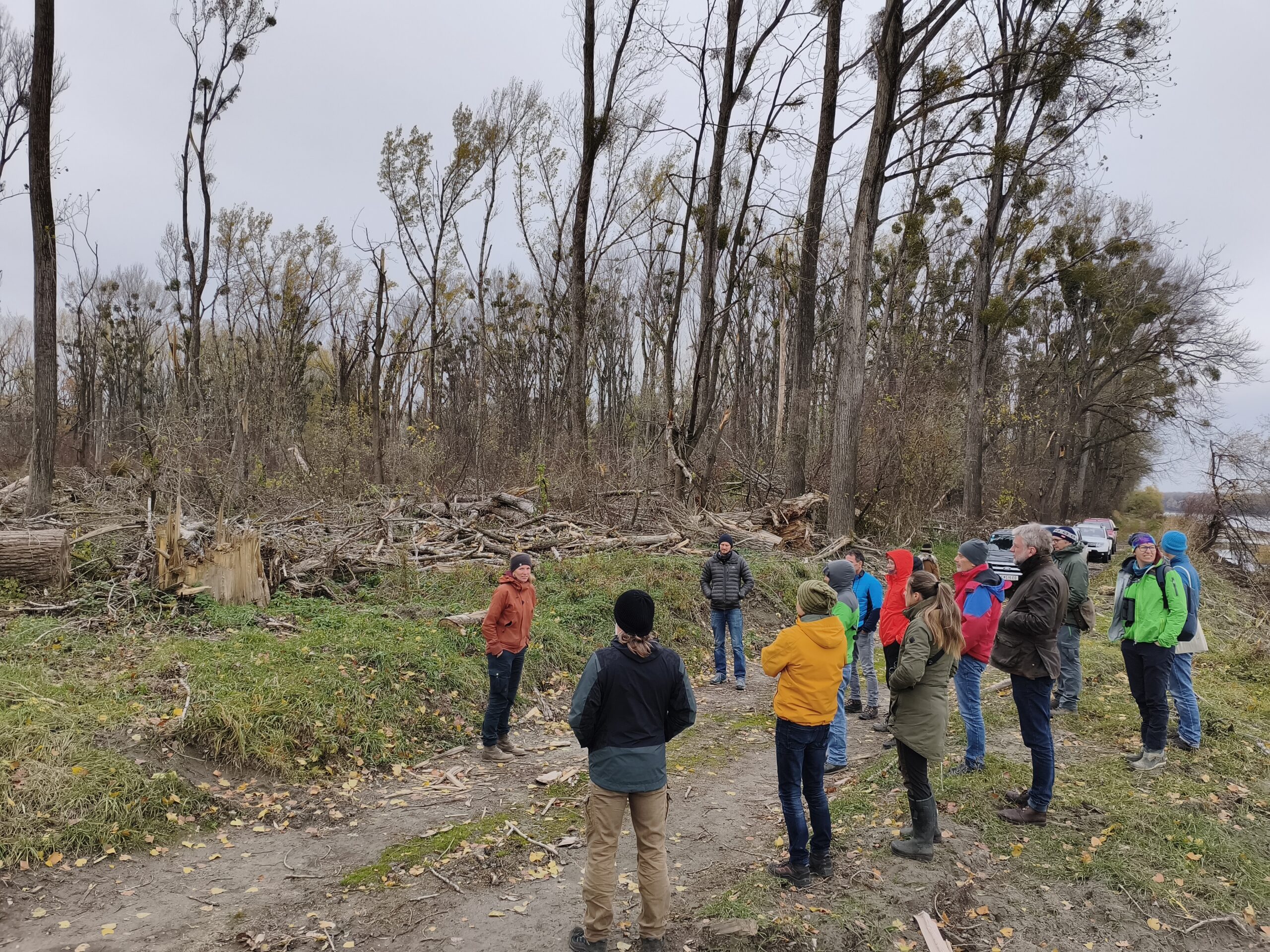
The field visit also took us to a rather different site: a hybrid poplar stand severely damaged by a major storm. Owned by WWF and managed by Donau-Auen National Park, the area will now serve as a valuable research site, offering a unique opportunity to observe how a softwood floodplain forest develops naturally following a major disturbance.
Of course, the meeting was also an opportunity to look ahead! We exchanged ideas on the newly approved LIFE project of WWF Austria, targeting the restoration of 12 km of riverbanks along the Morava River, as well as our recently submitted LIFE WILDERislands proposal, which includes further ambitious restoration measures in the nearby Roter Werd area.
The meeting was an excellent demonstration of how individual restoration projects can complement one another, share experience and contribute to a much bigger common goal: a more dynamic and better-connected Danube and its floodplains.
A big thank you to our colleagues from Dynamic LIFE Lines Danube for hosting us and sharing their experiences. We look forward to continuing our cooperation – and to seeing more natural river landscapes develop along the Danube and its tributaries!
IMG_20261119_100112
IMG_20261119_101701
IMG_20261119_110812